

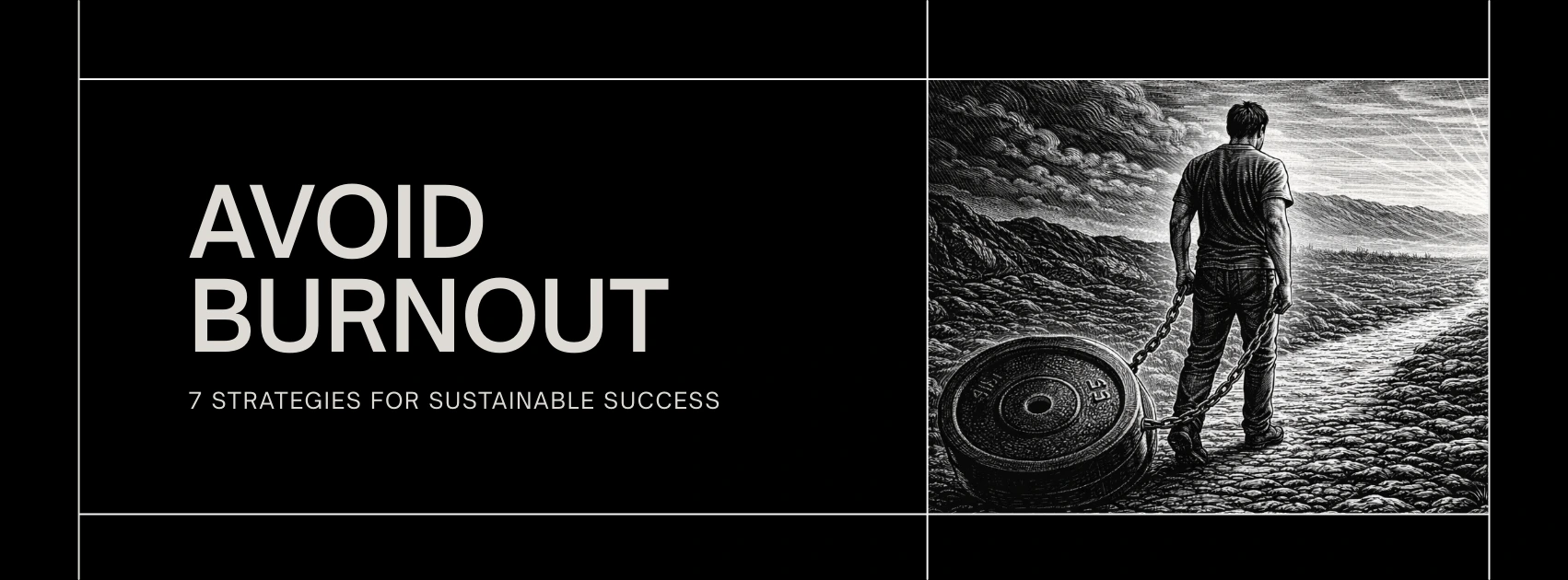
How to avoid entrepreneur burnout starts with recognizing the early warning signs and building recovery into your work, before your performance and health collapse.
Entrepreneurial burnout can creep up on even the most passionate founders. The constant hustle culture and pressure to succeed often make burnout feel like an inevitable part of the journey. In fact, about 42% of small business owners experienced burnout in just the last month – a startling statistic that shows how widespread this issue is. Burnout isn’t just an emotional drain; it can directly impact your venture. A study by CB Insights found 5% of startup failures are directly attributed to founder burnout, with the real impact likely higher when accounting for poor decisions made under exhaustion. The good news is that burnout is not a foregone conclusion of entrepreneurial life. It stems from patterns we can change. This article will show you how to protect both yourself and your business through evidence-based, sustainable strategies.
Before diving into prevention strategies, take a moment to acknowledge the problem. Burnout typically manifests as chronic fatigue, cynicism about work, and reduced performance. You might feel mentally foggy or detached from the passion that once drove you. Recognizing these signs early is crucial. Burnout often builds slowly – you push a little harder each day until one day you “hit a wall.” By noticing symptoms like persistent exhaustion, irritability, or declining creativity, you can intervene sooner rather than later.
Quick Win – Take a Clarity Break
If you’re feeling overwhelmed right now, step away for 10 minutes of fresh air or a brisk walk. This simple act can clear your head and reduce stress hormones. A Stanford study showed that walking boosts creative output by up to 60%, so a short walk not only eases stress but can help you return with new ideas. (For more quick recovery tips, our free Atlas Starter Kit offers a handy checklist – see mid-article for details.)
Burnout isn’t a personal failure; it’s often a byproduct of overextending yourself without enough recovery. Many founders wear multiple hats – CEO, salesperson, customer support, and more – working relentless hours while neglecting rest. Over time, this “always on” approach erodes your energy and enthusiasm. This guide shows how to avoid entrepreneur burnout with sustainable systems.
Here are seven ways to implement how to avoid entrepreneur burnout in real founder life.
-
How to avoid entrepreneur burnout with firm work boundaries
One of the most powerful steps is learning to set firm boundaries between work and personal time. It’s tempting to work 12+ hour days or respond to emails at midnight, especially when you’re passionate. But consistently blurring those lines leads to chronic stress. Give yourself permission to disconnect each day. For example, set an end-of-day alarm and stop work at a reasonable hour (e.g. 7 PM). After that, avoid checking work email until morning. If you communicate these boundaries to your team or clients, most will respect them. Remember, even 81% of entrepreneurs who do take vacations end up working during their holiday – a sign that many struggle with unplugging. By consciously protecting some personal time (evenings, one weekend day, vacations), you allow your mind and body to recharge. This isn’t lazy; it’s essential. Founders who make time for family, hobbies, or simply rest return to work with greater focus and creativity. Start with small steps: maybe commit to one unplugged evening per week and build from there.
-
Prioritize Your Physical Health (Body Basics)
Your physical well-being is the foundation of your entrepreneurial performance. It’s common to sacrifice sleep, exercise, and nutrition when the business demands are high. But that sacrifice is a false economy. Chronic sleep deprivation and neglecting health will make you far less productive over time. Aim for 7-8 hours of quality sleep as often as possible – consider it a non-negotiable investment in your business. If you struggle to find time, remember that as little as 10 minutes a day of mindfulness meditation can offset feelings of exhaustion equivalent to 44 extra minutes of sleep, according to research on entrepreneurs. In other words, short mindfulness breaks can help when you’re short on sleep (though they’re not a complete replacement).
Additionally, incorporate regular exercise and movement into your routine. Even moderate exercise a few times a week can significantly reduce stress and improve mood by releasing endorphins. Many entrepreneurs use exercise as a coping mechanism – in one survey, 73% of founders reported exercise helped them manage stress. Whether it’s a morning jog, a midday stretch, or an evening yoga session, treat exercise like a meeting with yourself that you can’t cancel. Eating well is equally important: skipping meals or living on caffeine and sugar will lead to energy crashes. Try to fuel your body with nutritious foods (plenty of protein, vegetables, healthy fats) and stay hydrated. Something as simple as drinking water throughout the day can prevent fatigue and headaches that sap your concentration.
-
Learn to Delegate and Build a Support System
A common burnout trap is the “I’ll just do it myself” mentality. Founders often feel responsible for every aspect of the business, but trying to personally tackle everything is a recipe for exhaustion. It’s critical to delegate tasks and build systems so the company isn’t over-dependent on you for every little thing. Look at your daily and weekly to-do list – are there tasks that someone else on your team (or an outsourced assistant) could handle at least 80% as well as you? Start handing those off. It might feel uncomfortable at first, but it frees you to focus on high-impact activities and strategic decisions. For example, if administrative tasks or customer service emails are eating up hours of your time, consider hiring a virtual assistant or training an employee to handle them.
Also, invest in systems and processes that can run without constant supervision. Whether it’s an automated marketing workflow or a standardized sales script for your team, systems lighten your load. Delegation isn’t just about tasks – it’s also about emotional support. Don’t carry the psychological burden alone. Build a support network of mentors, fellow entrepreneurs, or a coach who you can talk to when stress runs high. Sometimes just sharing your challenges with someone who understands can prevent feelings of isolation that exacerbate burnout. Remember: asking for help is not a weakness, it’s a strength that can keep you and your business healthier.
-
Practice Smart Time Management (Work Smarter, Not Harder)
Burnout often comes from feeling like you must work harder and longer to achieve more. In reality, the most effective entrepreneurs learn to work smarter, not just more hours. One tactic is to ruthlessly prioritize your tasks. Not every email or issue is urgent. Identify the top 2–3 high-impact tasks each day that truly move the needle for your business, and focus on those first. Let go of perfectionism on low-priority tasks – it’s okay if some minor things get B+ effort or are postponed. Techniques like time-blocking your schedule or using the Pomodoro method (25 minutes of focused work, 5-minute break) can help you maintain efficiency without mental burnout.
Also, be mindful of decision fatigue. If you treat every small decision like a life-or-death crisis, you’ll drain your mental energy quickly. As Amazon’s Jeff Bezos famously noted, most decisions are “two-way doors,” meaning they are reversible and don’t need agonizing deliberation. Save your deep energy for truly critical “one-way door” decisions. For everyday choices, try to make them faster or delegate them. Simplify where you can – for instance, adopt routines (like a regular lunch or outfit) to remove trivial choices and conserve mental bandwidth. By managing your time and decision energy wisely, you’ll accomplish more during work hours and feel less exhausted.
-
Incorporate Regular Recovery Rituals
Preventing burnout is not just about how you work, but how you rest and recover. High-achievers often underestimate the power of recovery. Schedule small recharge rituals throughout your day and week. This could mean taking a 10-minute mid-afternoon break to stretch and breathe, stepping outside for a short walk, or doing a quick mindfulness exercise at your desk. Even a brief pause can reset your stress levels. Over the longer term, make sure you’re taking days off. Maybe you declare Sundays as work-free days or enforce a rule of no work after Saturday noon. Use that time to engage in activities that replenish you: family time, reading, hobbies, or simply catching up on sleep.
It’s also helpful to occasionally disconnect from the entrepreneurial grind to gain perspective. Consider planning periodic digital detoxes – for example, one evening a week with no phone or laptop, or a weekend getaway every few months where you truly unplug. These breaks help prevent chronic stress from accumulating. Many entrepreneurs feel they “can’t afford” to take time off; in truth, you can’t afford not to. Think of downtime as fuel for your productivity. When you return from a real break, you’ll likely find yourself solving problems faster and generating new ideas, because you’ve given your mind space to refresh.
Three fast-acting tools to boost focus, energy, and discipline in the next 72 hours.
- 2-Minute Daily Checklist
- Brain-Chemistry Map
- 31-Day Streak Tracker
-
Reconnect with Your Purpose
Burnout often has an existential element – it’s not just about hours worked, but losing touch with the meaning behind those hours. When you find yourself questioning “Why am I doing this?”, it’s a red flag that burnout is looming. Combat this by reconnecting with your core purpose as an entrepreneur. Remind yourself what motivated you to start this business. Was it to solve a particular problem, to create freedom for your family, to make a positive impact in your industry? Keep that “why” front and center. Some founders keep a journal or vision board of their goals and values to look at during tough times. Others find energy in customer stories – hearing how your product or service helped someone can reignite your passion.
It’s also important to ensure your business goals align with your personal values. Studies have shown that entrepreneurs driven by intrinsic motivations (like passion or mission) are less likely to burn out, whereas those purely chasing money or status are more prone to it. The takeaway: chasing external success at the cost of internal fulfillment is a sure path to exhaustion. Make sure your definition of success includes meaning and joy, not just metrics. Sometimes that might mean adjusting your approach – for example, delegating more so you can focus on the parts of the business you love, or pivoting your strategy to better align with your values. When your work feels purposeful, challenges become easier to bear and are less likely to drain you completely.
-
Don’t Go It Alone – Combat Isolation
Entrepreneurship can be lonely, and feeling alone in your struggle can intensify burnout. Humans are social creatures; we need support and camaraderie. Make an effort to build connections in your entrepreneurial journey. This can be through a mastermind group, a co-working space, industry meetups, or even an online forum of founders. Sharing experiences and tips with peers can normalize the ups and downs you’re facing. It’s reassuring to realize others have had similar struggles – it removes the feeling that it’s “all on you.” If you have co-founders or a team, foster a culture where you can honestly discuss challenges and mental health. You might be surprised how opening up creates mutual support. Also consider finding a mentor or coach. They can provide guidance and a sympathetic ear, helping you navigate stressful situations before you burn out. Remember, seeking help or even professional counseling when overwhelmed is not a luxury; it can be a lifesaver. You’re investing in your own resilience.
Finally, involve your friends and family. It’s easy to become a stranger to loved ones during the all-consuming startup phase, but those relationships are part of what keeps you emotionally grounded. Schedule regular catch-ups or dinners where work talk is off-limits. Let your close ones know when you’re struggling so they can be there for you. Feeling part of a community – whether personal or professional – acts as a buffer against burnout. You realize you’re not actually alone on this journey.
Mid-Article Insight: The Self-Care Edge
More than half of entrepreneurs agree that prioritizing self-care is a key to fighting burnout. Think of self-care (exercise, healthy eating, hobbies, relaxation) as another business investment – one that pays dividends in clarity and energy. A quick actionable tip: try adding one small act of self-care to your daily routine, like a 5-minute morning meditation or an afternoon walk. Over time, these small acts create a big resilience boost.
Build Success You Can Sustain
Burnout is not a badge of honor; it’s a signal that something needs to change. By applying these strategies – setting boundaries, caring for your body, delegating, working smarter, taking real breaks, staying purpose-driven, and leaning on support – you can prevent entrepreneur burnout and replace the cycle of exhaustion with one of sustainable success. Imagine waking up excited to work because you’ve crafted a lifestyle that energizes you rather than depletes you. Your business will benefit, too: a healthy, focused founder is far more effective than a burned-out one.
Remember, your well-being is an asset to your company. Protect it fiercely. As you implement these changes, be patient and give yourself grace. It might feel unnatural at first to slow down or ask for help, but over time you’ll likely find your performance improves alongside your mood. In the long run, avoiding burnout isn’t just about feeling better – it’s about building a business that can thrive for years to come without costing you your health or happiness.
Success as an entrepreneur should not come at the expense of your sanity or health. By proactively managing your time, energy, and purpose, you’ll not only avoid the “silent killer” of burnout but also set yourself up for sustainable growth and fulfillment.
If you apply these principles, you will know how to avoid entrepreneur burnout without sacrificing growth.
FAQs:
- Q: What are the early warning signs of entrepreneurial burnout?
A: Early signs include chronic fatigue that doesn’t improve with rest, growing cynicism or detachment from your work, and reduced effectiveness or motivation. You might notice you’re making more mistakes, feeling irritable, or dreading tasks you used to enjoy. These are red flags that you need to pause and recharge before things worsen. - Q: How can I avoid burnout when my startup demands 24/7 attention?
A: It may feel like you must be “always on,” but nobody can sustain that. Prioritize tasks ruthlessly – focus on what truly drives growth and delegate or delay the rest. Establish boundaries (e.g., no work after 9 PM or on Sundays) and communicate them to your team. Even in a crunch, take short breaks to recharge. Remember that working smarter and taking care of your health actually improves your startup’s chances by keeping you effective. - Q: Is burnout the same as just being tired or stressed?
A: Not exactly. Being tired after a long week or feeling temporary stress is normal. Burnout is more severe and chronic. It’s a state of physical, mental, and emotional exhaustion coupled with reduced accomplishment and often a sense of detachment. If a weekend off or a short vacation doesn’t refresh you, you might be experiencing burnout. It often requires more deliberate recovery and changes to your work habits to overcome, not just a good night’s sleep. - Q: Can I recover from burnout, or is it a permanent condition?
A: You can absolutely recover from burnout with time and the right strategies. The first step is acknowledging it and giving yourself permission to take a break. Recovery involves rest, seeking support (maybe talking to a mentor or therapist), and re-aligning your work with healthier habits and your core values. It might mean adjusting workloads or making lifestyle changes. Many entrepreneurs come back from burnout with more self-awareness and better systems to prevent it in the future. - Q: How do I talk to my team or investors about needing time to recharge?
A: Approach it professionally and proactively. You don’t need to frame it as a personal crisis – you can say you’re scheduling some downtime to ensure you can perform at a high level long-term. Most investors and team members understand that a burned-out founder isn’t good for business. You might phrase it as, “In order to stay at peak performance, I’ll be taking Friday off to recharge and come back on Monday with fresh energy for our goals.” Leading by example can also encourage a healthier culture for everyone. - Q: What if I really love my work – can I still get burned out?
A: Yes, loving what you do doesn’t make you immune. In fact, passionate entrepreneurs are sometimes more prone to burnout because they push themselves too hard. Enjoyment can turn into burnout if you never take breaks or if your identity and self-worth become entirely tied to your work success. The key is balance: it’s fantastic that you love your work, just remember to love yourself as well. That means caring for your health, maintaining relationships, and having interests outside of work, too. These things will actually fuel your passion further rather than diminish it. - Q: What is the fastest way to learn how to avoid entrepreneur burnout?
A: Take action! No amount of knowledge or understanding will ever amount to meaningful change unless you act on it. So start today and implement what you learned above.
Enter your email and get instant access to three practical tools you can apply in 10 minutes.