


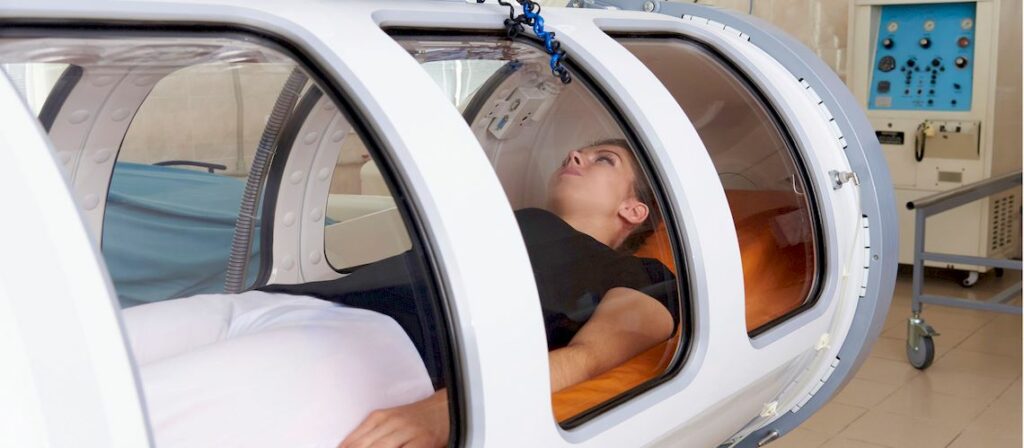
Hyperbaric Oxygen Therapy (HBOT) is a medical treatment that involves breathing pure oxygen in a pressurized environment. This therapy significantly increases the amount of oxygen in the blood, which can accelerate healing and improve overall health. The use of HBOT has expanded beyond its initial applications, offering a range of benefits supported by scientific research.
Definition
HBOT involves placing a patient in a hyperbaric chamber where the air pressure is increased up to three times higher than normal atmospheric pressure. Under these conditions, the lungs can absorb significantly more oxygen than in standard conditions. This oxygen-rich blood is then delivered throughout the body, promoting healing, fighting infections, and enhancing tissue repair (Löndahl et al., 2010).
Hyperbaric Oxygen Therapy (HBOT) typically uses pressures of 1.5 to 3 atmospheres absolute (ATA) to enhance oxygen delivery for healing. In severe cases, such as decompression illness, carbon monoxide poisoning, gas embolism, or necrotizing infections, pressures can reach up to 6 ATA for short, closely monitored sessions to achieve rapid therapeutic effects. These higher pressures help quickly remove harmful gases or save tissue but require careful monitoring to prevent oxygen toxicity (Moon, 2014; Thom, 2011).
History and Origins
The concept of using oxygen therapy dates back to the 1600s when Henshaw developed a chamber called the “Domicilium” to treat various conditions by changing atmospheric pressure. Modern HBOT, however, began in the early 20th century, primarily used to treat decompression sickness in divers. Over time, the medical community recognized its broader applications, such as treating chronic wounds, radiation injuries, and infections (Gill & Bell, 2004).
In recent decades, HBOT has been explored for improving physical and cognitive performance, particularly in athletes and healthy individuals seeking faster recovery, enhanced endurance, and improved mental clarity through better oxygenation and reduced inflammation (Efrati & Ben-Jacob, 2014; Elliott et al., 2011). Observations of its success in improving oxygenation, reducing inflammation, and promoting neuroplasticity have also led to its application in performance recovery for athletes and cognitive enhancement in some cases. While primarily used for recovery, its positive effects on endurance and mental clarity suggest broader applications beyond medical treatments (Efrati & Ben-Jacob, 2014; Elliott et al., 2011).
Mechanisms of Action
- Increased Oxygen Dissolution in Blood Plasma: Under high pressure, oxygen dissolves in the blood plasma, allowing it to reach tissues with compromised blood supply. This is particularly beneficial in areas where circulation is poor due to injury or disease, as it enhances oxygen delivery directly to the affected tissues, promoting healing (Tibbles & Edelsberg, 1996).
- Enhanced Oxygen Delivery to Tissues: The increased oxygen levels in the blood improve cellular metabolism, stimulate collagen production, and promote angiogenesis (the formation of new blood vessels). These processes are crucial for tissue repair and regeneration, making HBOT an effective treatment for chronic wounds and post-surgical recovery (Feldmeier, 2003).
- Reduction of Inflammation: High oxygen levels can reduce inflammation by inhibiting the activity of inflammatory cells and promoting the clearance of cellular debris. This anti-inflammatory effect is particularly useful in conditions such as radiation-induced tissue damage and chronic inflammatory diseases (Buras, 2000).
- Improved Immune Function: HBOT enhances the bactericidal activity of white blood cells, improving the body’s ability to fight infections. This is achieved by increasing the production of reactive oxygen species that white blood cells use to kill bacteria (Thom, 2011).
Benefits
HBOT offers numerous health benefits, many of which are supported by rigorous scientific studies:
- Improved Wound Healing and Tissue Repair: HBOT is particularly effective in treating chronic, non-healing wounds, such as diabetic foot ulcers, by enhancing oxygen delivery to damaged tissues and promoting faster healing (Löndahl et al., 2010).
- Enhanced Recovery from Surgery and Injury: Patients recovering from surgery or traumatic injuries often experience faster recovery and reduced complications when HBOT is included in their treatment plan. This is due to the therapy’s ability to accelerate tissue repair and reduce post-operative inflammation (Sundararajan et al., 2014).
- Reduced Inflammation and Infection: By enhancing the body’s immune response and reducing inflammation, HBOT can help control infections and prevent the spread of bacteria, particularly in cases of osteomyelitis and other serious infections (Buras, 2000).
Improved Cognitive Function and Mental Clarity
Increased Overall Well-being
Many patients report improvements in energy levels, sleep quality, and an overall sense of well-being following regular HBOT sessions. These benefits are linked to HBOT’s ability to reduce inflammation, enhance immune function, and promote cellular repair (Thom, 2011). Additionally, the increased oxygen delivery to tissues may boost mitochondrial efficiency, leading to better energy production and recovery from fatigue (Efrati & Ben-Jacob, 2014). The reduction in oxidative stress and improved circulation may also contribute to greater vitality and an enhanced quality of life (Gill & Bell, 2004).
Applications
HBOT can be used to address various conditions and health goals, including:
Physical Recovery
- Treating Chronic Wounds and Ulcers: HBOT is particularly effective in treating diabetic foot ulcers and other non-healing wounds, offering a non-invasive treatment option that enhances the body’s natural healing processes (Löndahl et al., 2010).
- Accelerating Recovery from Surgery and Injuries: Post-operative patients and those recovering from traumatic injuries may experience faster healing and reduced risk of complications with the inclusion of HBOT in their recovery protocol (Sundararajan et al., 2014).
- Enhancing Athletic Performance and Recovery:
Many athletes, including high-profile figures such as LeBron James and NFL players like Terrell Owens and Hines Ward, use Hyperbaric Oxygen Therapy (HBOT) to accelerate recovery from intense training sessions and injuries, helping them maintain peak performance levels (Katz, 2023; Hyperbaric Oxygen Institute, 2023). HBOT increases oxygen availability to tissues, promoting muscle repair, reducing inflammation, and accelerating healing by enhancing circulation and oxygen delivery (Elliott et al., 2011; Katz, 2023). The therapy aids in faster recovery by supporting the removal of metabolic waste, such as lactic acid, and reducing oxidative stress, which further aids tissue regeneration (Gill & Bell, 2004; Thom, 2011). Notably, tennis champion Novak Djokovic has used HBOT ongoingly since 2010 to recover from injuries and maintain his physical conditioning during demanding tournaments (Dickson, 2019; Vercelletto, 2019; HBOT Therapy, 2024).
In addition, HBOT stimulates collagen production and angiogenesis, key processes in muscle and tendon repair, and improves mitochondrial function, which enhances energy production and reduces fatigue, helping athletes recover faster and train consistently (Efrati & Ben-Jacob, 2014). Studies have demonstrated that HBOT not only improves aerobic capacity and endurance but also aids in maintaining cognitive function, benefiting athletes in both recovery and performance (Athlecare, 2023; Hyperbaric Oxygen Institute, 2023). As such, HBOT has gained widespread popularity among athletes across various sports for its ability to mitigate the effects of intense physical exertion and enhance overall athletic performance (Athlecare, 2023; Katz, 2023).
Neurological Benefits
- Supporting Cognitive Function and Mental Health: HBOT has shown promise in improving outcomes for patients with traumatic brain injuries, strokes, and other neurological conditions, possibly due to enhanced oxygen delivery to the brain and the promotion of neuroplasticity (Harch et al., 2012).
- Managing Conditions Such as Decompression Sickness, Carbon Monoxide Poisoning, and Certain Infections: HBOT is a well-established treatment for decompression sickness and carbon monoxide poisoning, as it quickly increases blood oxygen levels and helps remove harmful gases from the body (Moon, 2014).
Scientific Evidence
A robust body of research supports the efficacy of HBOT in various medical applications. For instance, studies published in the Journal of Applied Physiology and Undersea & Hyperbaric Medicine have demonstrated significant improvements in wound healing, infection control, and overall health with regular HBOT sessions (Löndahl et al., 2010; Thom, 2011). Research has also explored the benefits of HBOT for neurological conditions, with promising results in enhancing cognitive function and reducing symptoms of PTSD and TBI (Harch et al., 2012).
References
- Athlecare. (2023). The Hyperbaric Chamber: 5 Compelling Reasons Athletes Should Use HBOT for Peak Performance and Recovery. Available at: https://www.athlecare.com
- Bennett, M. H., et al. (2005). Hyperbaric oxygen therapy for acute ischemic stroke. Cochrane Database of Systematic Reviews.
- Buras, J. A. (2000). Basic mechanisms of hyperbaric oxygen in the treatment of ischemic-reperfusion injury. International Anesthesiology Clinics, 38(1), 91-109.
-
Dickson, M. (2019) Djokovic took an oxygen chamber on the back of a lorry to the US Open [online]. Available from: https://www.dailymail.co.uk/sport/tennis/article-7478829/Novak-Djokovic-took-oxygen-chamber-lorry-Open.html
- Efrati, S., & Ben-Jacob, E. (2014). Reflections on the neurotherapeutic effects of hyperbaric oxygen. Dementia and Geriatric Cognitive Disorders, 38(5-6), 268-274.
- Elliott, S. D., McKenna, M. J., Goodman, C. A., et al. (2011). Hyperbaric oxygen therapy improves 100% oxygen peak power and increases post-exercise blood flow in competitive cyclists. European Journal of Applied Physiology, 111(7), 1391-1400.
- Feldmeier, J. J. (2012) Hyperbaric oxygen therapy and delayed radiation injuries (soft tissue and bony necrosis): 2012 update. Undersea & Hyperbaric Medicine: Journal of the Undersea and Hyperbaric Medical Society, Inc. 39 (6), 1121–1139.
- Gill, A. L., & Bell, C. N. (2004). Hyperbaric oxygen: Its uses, mechanisms of action, and outcomes. QJM: An International Journal of Medicine, 97(7), 385-395.
- Harch, P. G., Andrews, S. R., Fogarty, E. F., et al. (2012). A phase I study of low-pressure hyperbaric oxygen therapy for blast-induced post-concussion syndrome and post-traumatic stress disorder. Journal of Neurotrauma, 29(1), 168-185.
- HBOT Therapy. (2024). How Hyperbaric Oxygen Therapy is Enhancing Athletic Recovery: The Novak Djokovic Story. Available at: https://www.hbot-therapy.com
- Hyperbaric Oxygen Institute. (2023). Uncovering Truths: Do Athletes Benefit From Hyperbaric Oxygen Therapy?. Available at: https://www.hyperbaricoxygeninstitute.com
- Katz, A. (2023). 6 Reasons Top Athletes Use Hyperbaric Oxygen Therapy. Available at: https://www.hyperbaricmedicalsolutions.com
- Löndahl, M., Katzman, P., Hammarlund, C., et al. (2010). Hyperbaric oxygen therapy facilitates healing of chronic foot ulcers in patients with diabetes. Diabetes Care, 33(5), 998-1003.
- Moon, R. E. (2014). Hyperbaric oxygen therapy indications: 14th edition. Undersea & Hyperbaric Medicine, 41(3), 115-175.
- Sundararajan, R., Balasubramanian, S., & Gnanavelu, K. (2014). Hyperbaric oxygen therapy for enhancing graft survival in oral cancer patients post-surgery. Indian Journal of Plastic Surgery, 47(3), 303-307.
- Thom, S. R. (2011). Hyperbaric oxygen: Its mechanisms and efficacy. Journal of Applied Physiology, 106(1), 379-382.
- Tibbles, P. M., & Edelsberg, J. S. (1996). Hyperbaric-oxygen therapy. New England Journal of Medicine, 334(25), 1642-1648.
- Vercelletto, N. (2019). Djokovic brought a hyperbaric chamber to the US Open. Tennis.com. Available at: https://www.tennis.com/baseline/articles/djokovic-brought-a-hyperbaric-chamber-to-the-us-open

